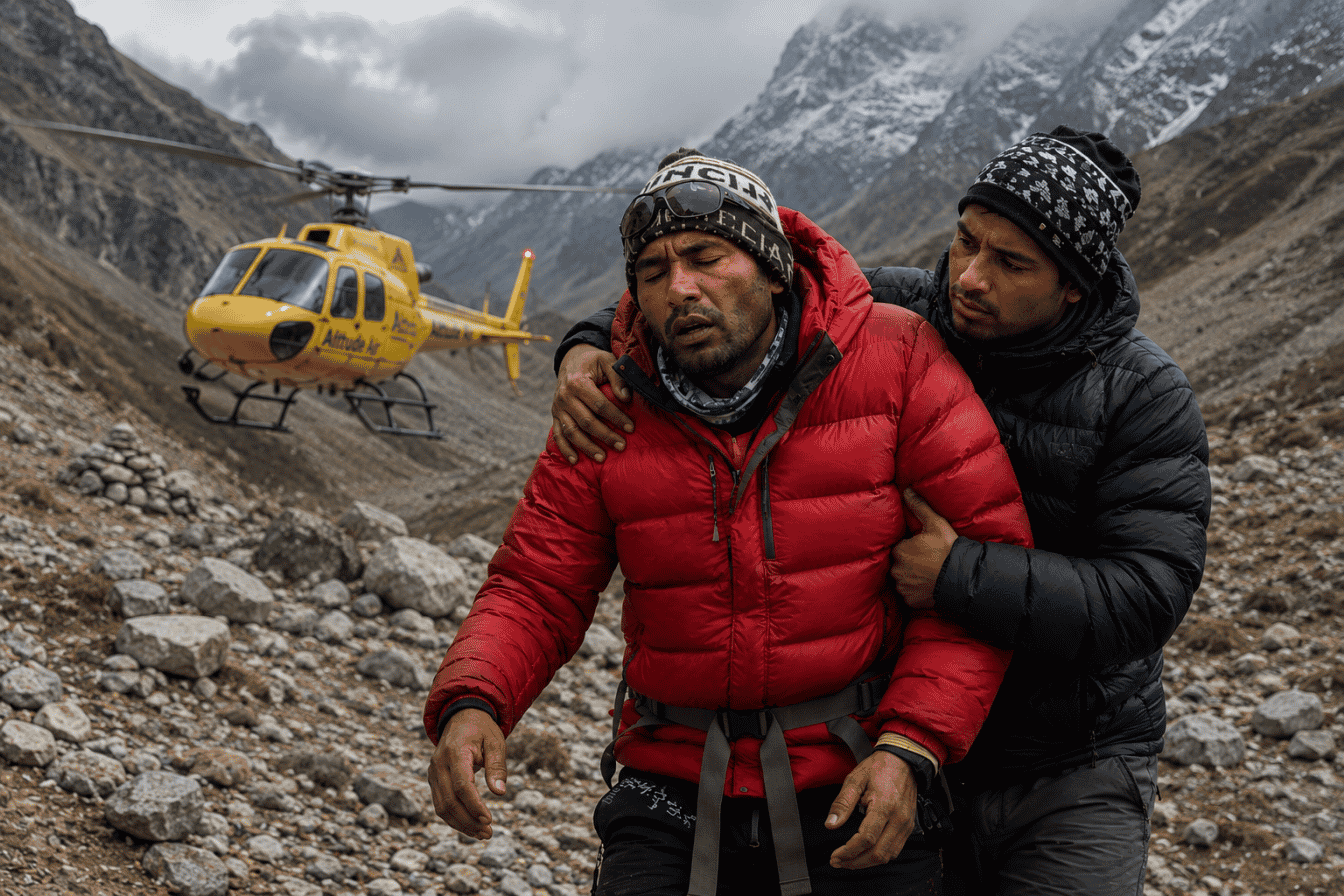
MS (Acute Mountain Sickness), HAPE (High Altitude Pulmonary Edema), and HACE (High Altitude Cerebral Edema) are the three forms of altitude sickness that affect trekkers in Nepal. AMS is common and usually mild, causing headache and nausea above 2,500m. HAPE and HACE are life-threatening emergencies requiring immediate descent — and in remote areas, helicopter evacuation is often the fastest and only effective treatment.

Every year, trekkers in Nepal's high-altitude regions — the Everest, Annapurna, Langtang, and Manaslu circuits among them — experience some form of altitude sickness. Understanding the difference between mild AMS and the life-threatening conditions HAPE and HACE can be the difference between a manageable headache and a medical emergency.

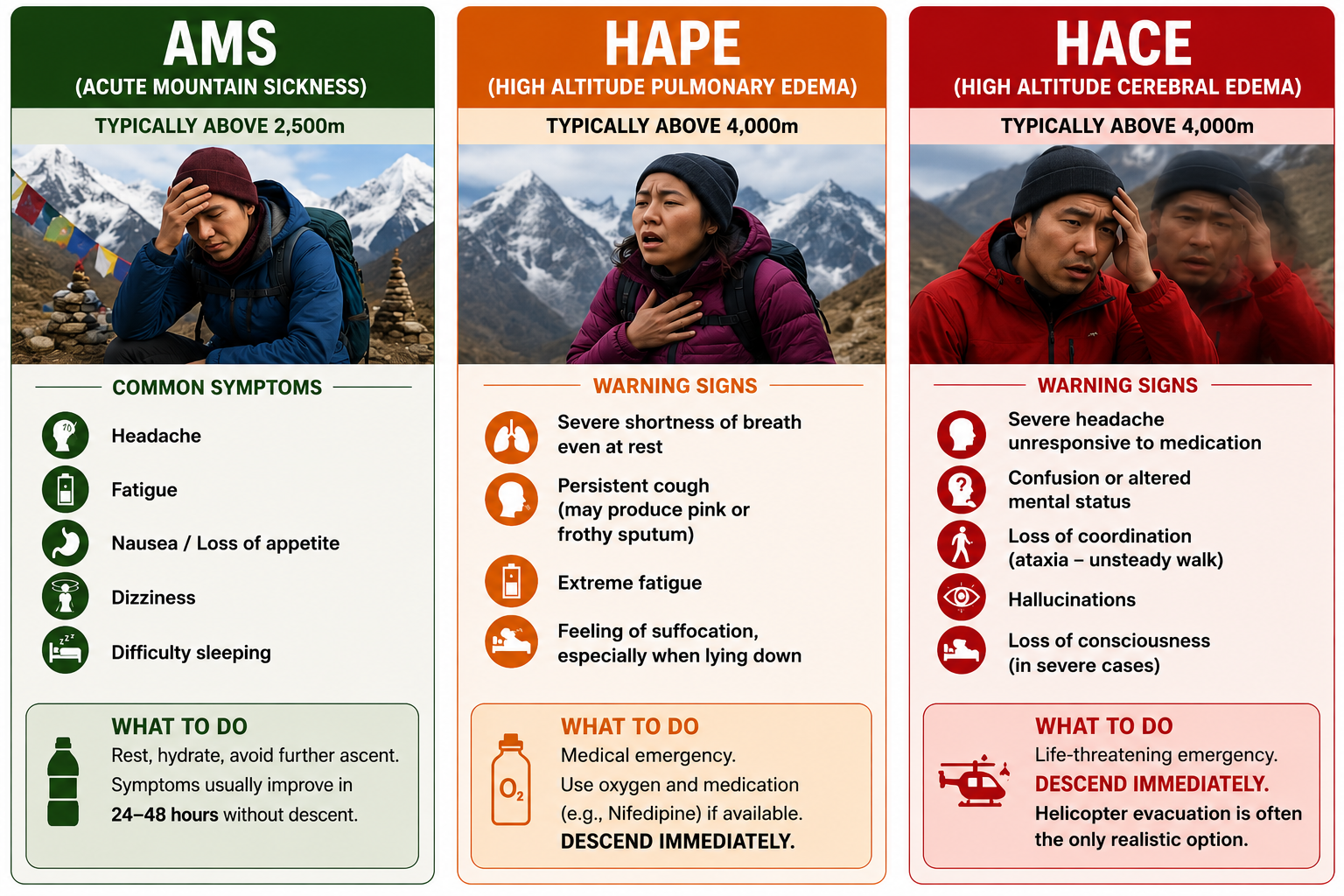
Acute Mountain Sickness (AMS) is the mildest and most common form, typically occurring above 2,500m. Symptoms include headache, fatigue, nausea, dizziness, and difficulty sleeping. AMS is usually manageable with rest, hydration, and avoiding further ascent until symptoms resolve — most cases improve within 24-48 hours without descent.
High Altitude Pulmonary Edema (HAPE) is a buildup of fluid in the lungs, typically occurring above 4,000m. Warning signs include severe shortness of breath even at rest, a persistent cough (sometimes producing pink or frothy sputum in severe cases), extreme fatigue, and a feeling of suffocation, especially when lying down. HAPE can progress rapidly — sometimes within hours — and is a medical emergency requiring immediate descent. Oxygen and medication (such as nifedipine) can help stabilise a patient, but descent — by foot, yak, or helicopter — remains the definitive treatment.
High Altitude Cerebral Edema (HACE) is swelling of the brain due to altitude, also typically above 4,000m, and is the most dangerous of the three. Warning signs include severe headache unresponsive to medication, confusion, loss of coordination (ataxia — difficulty walking a straight line is a classic early sign), hallucinations, and in severe cases, loss of consciousness. HACE can be fatal within hours if untreated. Like HAPE, immediate descent is critical, and helicopter evacuation is often the only realistic option for rapid descent from remote high-altitude locations.
Why helicopter evacuation matters: in regions like the Everest Base Camp trail above Namche Bazaar, or the Annapurna Circuit above Manang, descending several thousand metres on foot can take a full day or more — time a HAPE or HACE patient may not have. A helicopter can reduce that descent to under an hour, often making the difference in outcome.
What to do if you suspect HAPE or HACE in yourself or a trekking companion?
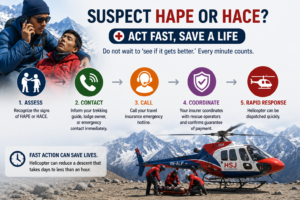
Do not wait to 'see if it gets better.' Contact your trekking guide, lodge owner, or emergency contact immediately. If you have travel insurance with an emergency assistance hotline, call it — they can coordinate directly with rescue operators and confirm guarantee of payment so a helicopter can be dispatched without delay. At HSJ Heli & Assistance, our 24/7 alarm center coordinates directly with insurers on these time-critical cases, with crews able to be airborne within 60 minutes of a confirmed dispatch.
Prevention remains the best strategy: ascend gradually (no more than 300-500m of sleeping altitude gain per day above 3,000m), stay hydrated, avoid alcohol at altitude, and consider acclimatisation days on longer treks. If you're trekking with a reputable guide, they should be trained to recognise these symptoms early — but ultimately, you are your own best advocate. If something feels seriously wrong, say so.
📌 If you're trekking above 3,000m and need emergency evacuation, call our 24/7 line: +977 9810650405. We coordinate directly with international insurers for fast, transparent dispatch.