
A Nepal helicopter rescue follows five general steps: an emergency call is received and a case reference assigned, a CAAN-certified helicopter is dispatched (typically airborne within 60 minutes), the patient is evacuated to a partner hospital in Kathmandu, the insurer is updated and guarantee of payment is processed, and the case is closed with full documentation delivered, usually within 24 hours.

When someone needs emergency helicopter rescue in Nepal's mountains, a coordinated process kicks into action — one that, when run well, moves quickly while still maintaining the documentation and verification standards that protect everyone involved, from the patient to the insurer.
Step 1: Emergency call received.
The process begins with a call — usually from a trekking guide, lodge owner, fellow trekker, or the affected person themselves, often via satellite phone or local mobile network where available.
A 24/7 alarm center receives the call, assigns a case reference number, and gathers initial details: the patient's location (GPS coordinates if possible, or named landmarks like 'Gorak Shep' or 'Manang'), a description of the medical situation, and contact information for follow-up.
Step 2: Medical assessment and dispatch decision.
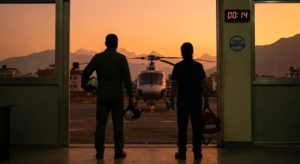
Before a helicopter is dispatched, the situation is assessed for medical necessity — this might involve a quick consultation with a medical coordinator, especially for ambiguous cases.
For clear emergencies (severe altitude sickness, major trauma, cardiac events), this assessment happens rapidly. A CAAN-certified helicopter and crew are then dispatched, with the goal of being airborne within 60 minutes of the initial call for confirmed emergencies.
Step 3: Flight and evacuation.
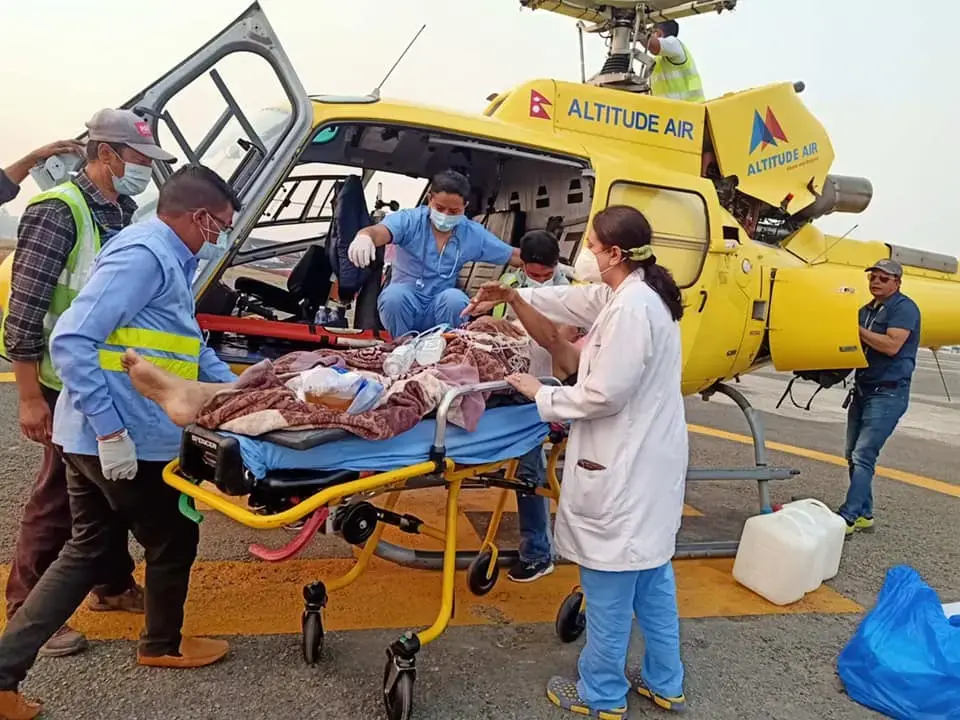
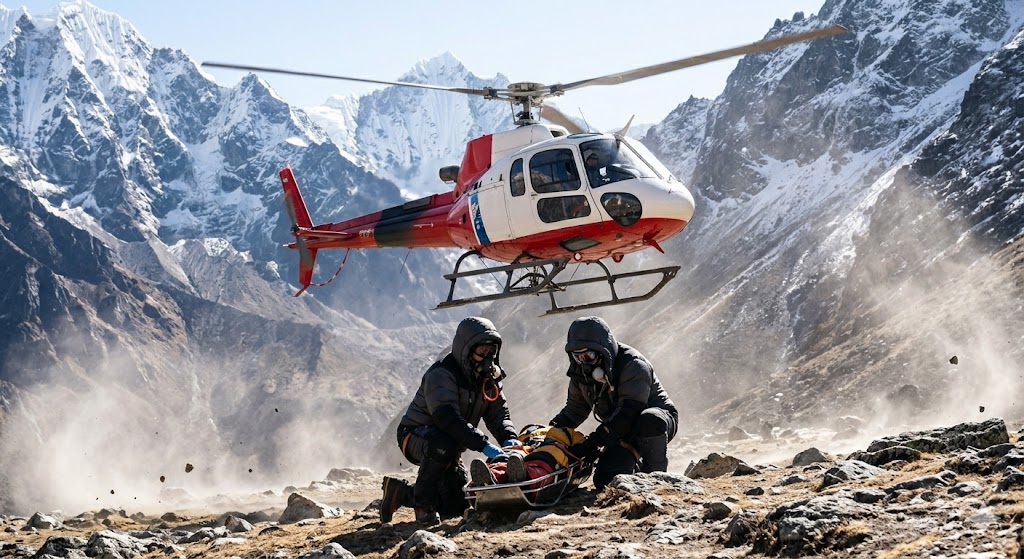
The helicopter flies to the patient's location — landing directly if a suitable site exists nearby, or to the nearest safe landing zone, from which the patient may need to be moved a short distance.
The patient is loaded, and the helicopter flies to a partner hospital, typically in Kathmandu, where appropriate trauma and altitude-related medical care is available. Flight time varies significantly by region — from under an hour for closer locations to 1.5-2 hours for the most remote areas.
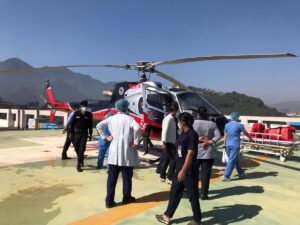
Step 4: Hospital handover and insurer coordination.
On arrival, the patient is handed over to hospital medical staff, with a verbal and/or written handover summarising the situation, treatment given during transport, and vital signs.
In parallel, the rescue operator's insurance desk notifies the patient's insurer or assistance company (if not already involved from the outset), providing case details and beginning guarantee of payment (GOP) coordination for both the flight and the hospital treatment.
Step 5: Case closure and documentation.
Once the patient is stable and admitted (or discharged, for less serious cases), the rescue case moves toward closure. This includes compiling the flight manifest (documenting the flight, aircraft, crew, and patient details), a medical report from the receiving facility, and a single itemised invoice covering the helicopter evacuation. This documentation package is typically delivered to the insurer within 24 hours of case closure — a standard that significantly speeds up the insurer's own claims processing.
What happens if the patient requires further care or repatriation?
If the patient needs to return to their home country for ongoing treatment, the rescue operator's assistance desk can coordinate repatriation logistics — commercial flights with medical escort, air ambulance for more serious cases, or in the most severe outcomes, repatriation of remains. This typically involves liaison with the patient's embassy, airline medical clearance procedures, and the insurer's repatriation benefits.
Throughout this process, communication flows in multiple directions simultaneously: to the patient/their travelling companions, to the insurer/assistance company, and internally between the dispatch team, flight crew, and hospital. A well-run rescue operator maintains a single case reference and ideally a named case manager throughout, so that no party — patient, insurer, or hospital — loses track of the case's status.
📌 If you're facing an emergency, call our 24/7 line now: +977 9810650405. We coordinate the full process — from dispatch to documentation — directly with your insurer.