24/7 Emergency Rescue Line Active — Nepal Airspace Operational
Blogs

Choosing a Travel Insurance Policy for Trekking in Nepal: What to Look For

HSJ Heli 4 min read

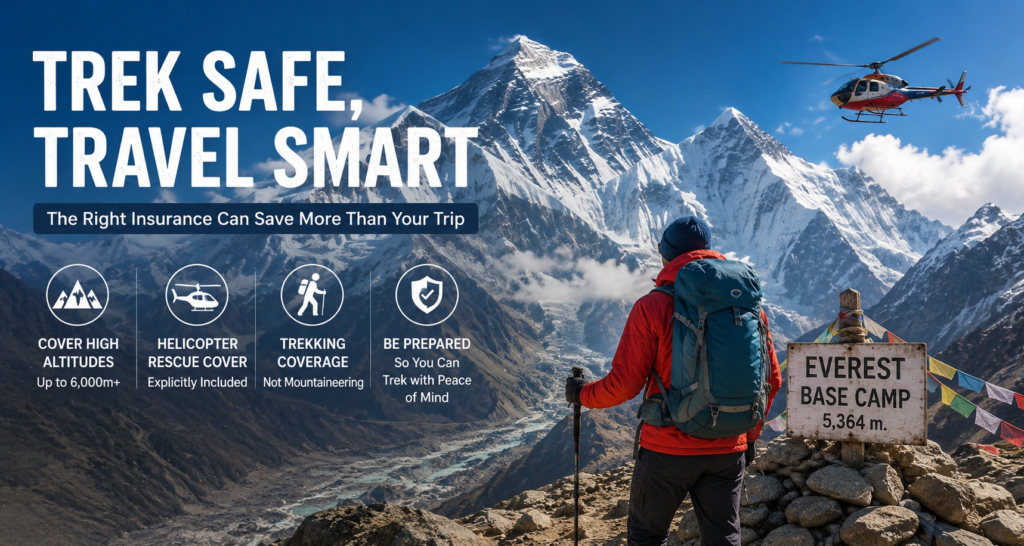
When choosing travel insurance for trekking in Nepal, verify three things specifically: the policy's altitude limit (it should cover at least 6,000m for popular treks like Everest Base Camp and the Annapurna Circuit), explicit helicopter evacuation coverage (not just 'medical evacuation' generally, which can sometimes exclude helicopter costs or cap them low), and the activity classification (ensure 'trekking' at altitude is covered, as some policies classify high-altitude trekking as 'mountaineering' requiring a separate, often pricier, policy add-on).

Travel insurance for Nepal trekking isn't a one-size-fits-all product, and the difference between an adequate policy and an inadequate one often only becomes apparent during an emergency — when it's too late to fix. Here's what to actually check before you buy.

Altitude limit:

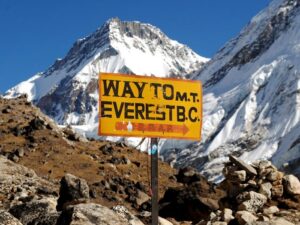
This is the single most common gap in coverage for Nepal trekkers. Many standard travel insurance policies — including ones that otherwise seem comprehensive — include a default altitude limit, often 2,500m or 3,000m, beyond which coverage doesn't apply unless you've purchased a specific 'high altitude' or 'trekking' add-on. Given that Everest Base Camp sits at 5,364m, Annapurna Circuit's Thorung La pass at 5,416m, and even popular shorter treks like the Annapurna Sanctuary trail reach over 4,000m, this default limit is simply insufficient for the vast majority of Nepal's iconic treks. Look for policies that explicitly state coverage up to at least 6,000m for trekking activities.
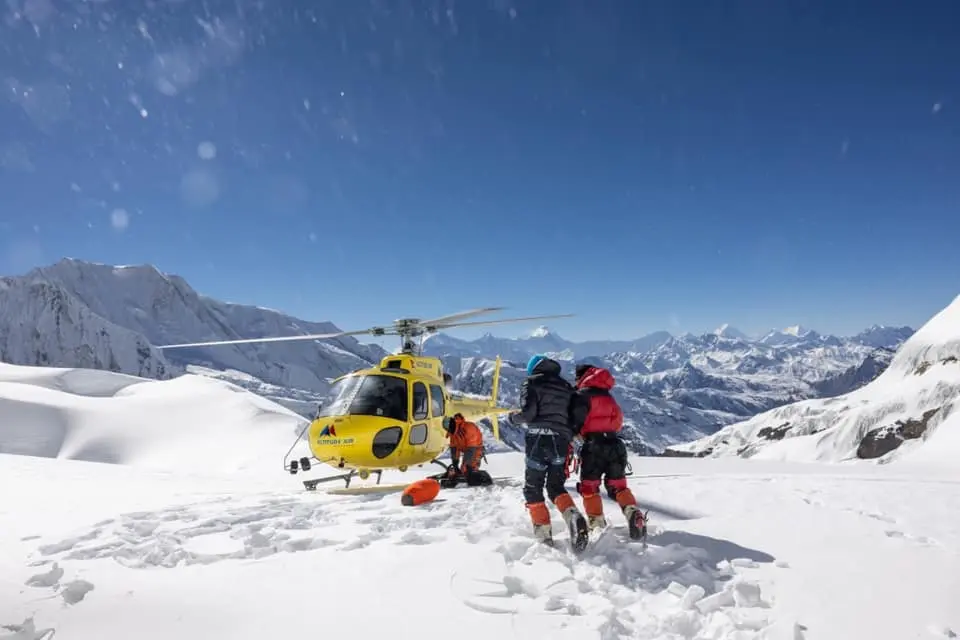
Helicopter evacuation — explicitly stated:

'Medical evacuation' as a general term can sometimes refer only to ground transport or commercial flight repatriation, with helicopter evacuation either excluded or subject to a much lower coverage cap (for example, a policy might cover 'evacuation up to USD 100,000' but cap 'helicopter evacuation' specifically at USD 5,000 — which, as covered in our cost guide, may not be sufficient for the most remote high-altitude rescues). Read the policy wording specifically for the words 'helicopter' and check the stated coverage limit against realistic costs for your planned trek's altitude and region.

Activity classification — trekking vs mountaineering:
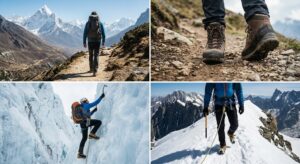
Insurers typically distinguish between 'trekking' (walking on established trails, even at high altitude, without specialised climbing equipment) and 'mountaineering' (use of ropes, crampons, ice axes for technical ascents, or climbing peaks requiring permits as 'mountaineering' under Nepal's regulations). Most popular treks — Everest Base Camp, Annapurna Circuit, Langtang, Manaslu Circuit (the latter sometimes requiring a special permit but still generally classified as trekking) — fall under 'trekking' for insurance purposes. However, if your itinerary includes any peak climbing (even popular 'trekking peaks' like Island Peak or Mera Peak, which require ropes and technical gear), you likely need 'mountaineering' coverage, which is a different and usually more expensive policy category.

Pre-existing conditions:

If you have a pre-existing medical condition — particularly cardiac, respiratory, or any condition that could be exacerbated by altitude — check whether your policy requires disclosure of pre-existing conditions and whether non-disclosure would void coverage in a related emergency. Altitude-related complications can sometimes interact with underlying conditions, and insurers may scrutinise this closely in a claim.

Emergency assistance contact — and what it actually does:

Nearly all comprehensive policies include a 24/7 emergency assistance phone number. Before you travel, understand what this number is for: in a genuine emergency, this is the number that should be called (by you, your guide, or a companion) to initiate the GOP (guarantee of payment) process described in our GOP guide. Save this number — written down, not just in your phone, in case your phone is lost or out of battery — alongside your policy number.

Repatriation coverage:

In the rare but serious case of a fatality, repatriation of remains is a coverage category that's easy to overlook but important — both for the financial cost involved and for the practical and emotional burden it removes from family members during an already devastating situation.

Practical comparison approach:

Rather than comparing policies purely on price, create a simple checklist based on the above — altitude limit (6,000m+), helicopter evacuation explicitly covered with a realistic limit (USD 10,000+ recommended given regional cost variation), activity classification matching your actual itinerary, and a clearly stated 24/7 emergency assistance number. A policy that's slightly more expensive but clearly meets all four criteria is generally a better choice than a cheaper policy with ambiguous wording on any of them.

📌 Already have a policy and unsure if it covers your planned route? Our insurance desk can help clarify how evacuation coordination works with most major insurers — contact us at [email protected].