
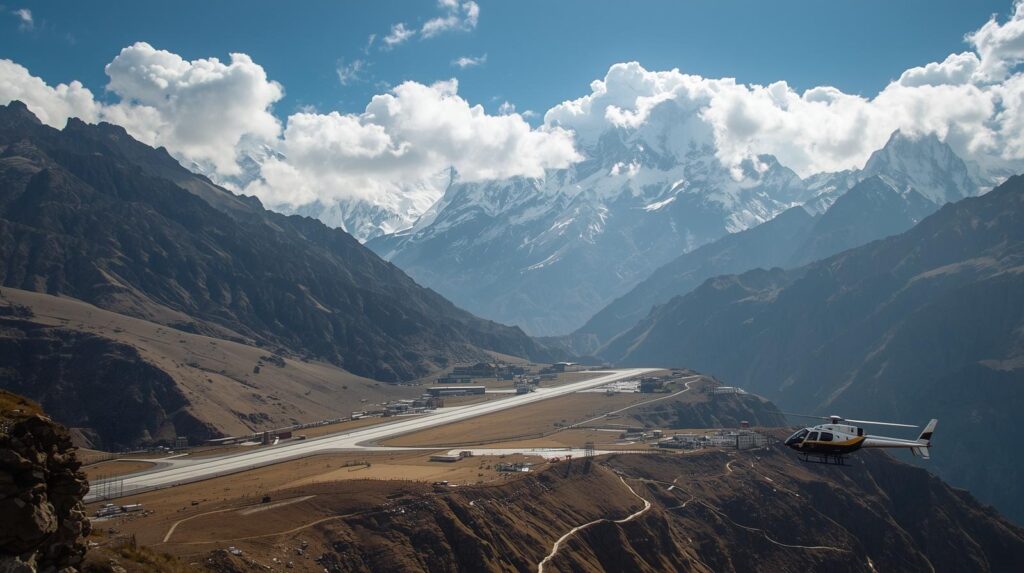
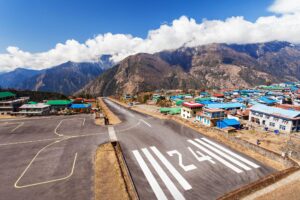
 If you've researched trekking to Everest Base Camp, you've likely come across warnings about Lukla's Tenzing-Hillary Airport — often cited among the most dangerous and weather-affected airports in the world. Its short runway, mountainous approach, and the Khumbu region's notoriously unpredictable weather mean that flight delays and cancellations are common, particularly during peak trekking seasons (October-November and March-May, ironically also the best trekking weather windows).
For travellers, the practical risk is this:
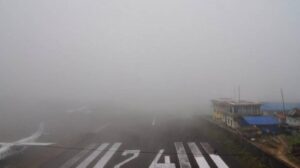
If your return flight from Lukla to Kathmandu is delayed or cancelled — sometimes for multiple consecutive days during poor weather — and you have an international flight booked from Kathmandu, you could miss it. This isn't a rare edge case; it happens to trekkers every season, particularly during the cloud-prone afternoon hours that often affect Lukla's flight schedule.
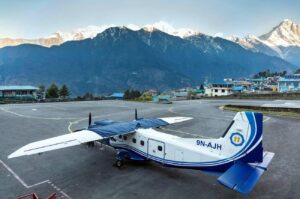 This is where a helicopter transfer becomes a practical contingency. Helicopters have different operating minimums than fixed-wing aircraft and can sometimes fly in conditions — lower cloud ceilings, for example — that ground Twin Otter and Dornier aircraft used on the standard Lukla-Kathmandu route. A helicopter transfer takes approximately 45 minutes and starts from USD 450 per person (with per-person cost dropping when shared among a group of up to 5).
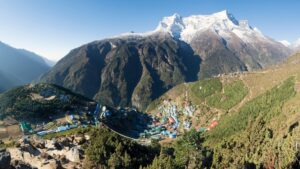 Beyond schedule reliability, the helicopter transfer also offers a different experience: Lower-altitude scenic views over the Khumbu foothills, often passing close to villages and terraced hillsides that aren't visible from higher-altitude tour routes, and a noticeably faster transition back to Kathmandu's lower elevation, which some trekkers find helpful after days at altitude.
Practical booking tip:
if your trip dates fall within peak season (October-November or March-May) and you have any international connections within 1-2 days of your planned Lukla departure, it's worth discussing a helicopter transfer option with your trekking operator before you start your trek — not after you're already facing a delay.
📌 Don't let weather delays disrupt your trip home. Helicopter transfers from Lukla start at USD 450 — contact us to arrange a transfer or backup option for your itinerary.