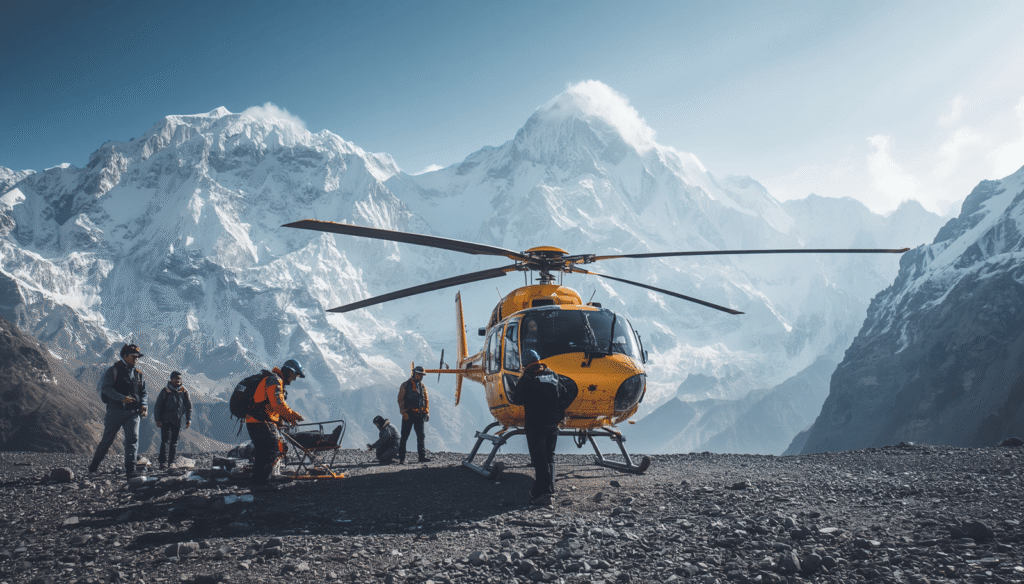
Costs vary primarily based on three factors:
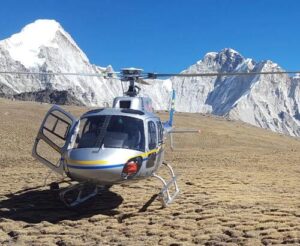
Altitude, distance from Kathmandu, and weather/landing difficulty. A rescue from Lukla (2,860m) is relatively straightforward — short flight time, established helipad, frequent traffic. A rescue from Everest Base Camp at 5,364m, by contrast, requires a specialised high-altitude helicopter (typically an Airbus AS350 B3e), often flown with reduced passenger capacity for safety, and involves significantly more fuel and flight time.
Here's a general breakdown of rescue cost ranges by region:
Namche Bazaar and lower Khumbu (3,440m and below) — USD 3,000 to 5,000. Everest Base Camp and the upper Khumbu (above 5,000m) — USD 6,000 to 10,000. Annapurna Circuit, including Thorung La and Annapurna Base Camp — USD 4,000 to 7,000. Langtang and Gosaikunda — USD 4,000 to 6,000. Manaslu Circuit — USD 5,000 to 8,000. Makalu, Kanchenjunga, and far-western regions like Dolpo — USD 10,000 and above, due to the long flight distance from Kathmandu.
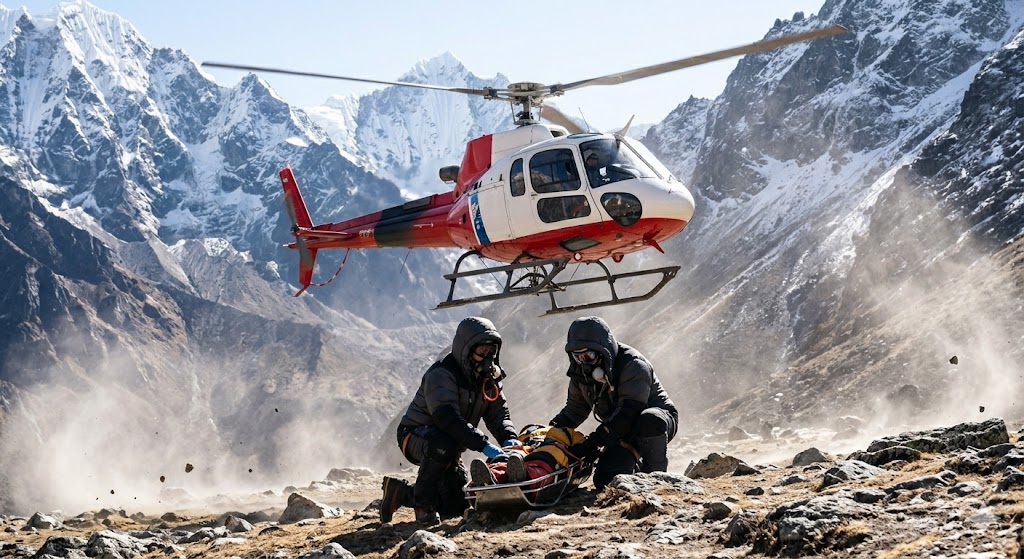
These figures are estimates and can vary based on weather conditions (which may require multiple attempts or holding patterns), time of day, and the specific operator. They should always be verified against your insurer's coverage limits before departure.
What should travellers do?
 First, confirm your travel insurance explicitly covers helicopter evacuation at altitude — many basic policies cap coverage well below the cost of a high-altitude rescue, or exclude it above a certain elevation (commonly 4,500-6,000m, so check the fine print for your specific trek). Second, save your insurer's emergency contact number and your assistance company's number in your phone before you depart — not just a generic helpline. Third, if you ever feel pressured by a guide or lodge owner to call for a helicopter when you don't feel it's medically necessary, get a second opinion if possible; legitimate rescue dispatch should always follow a medical assessment.